
FramePico2 Expansion Card
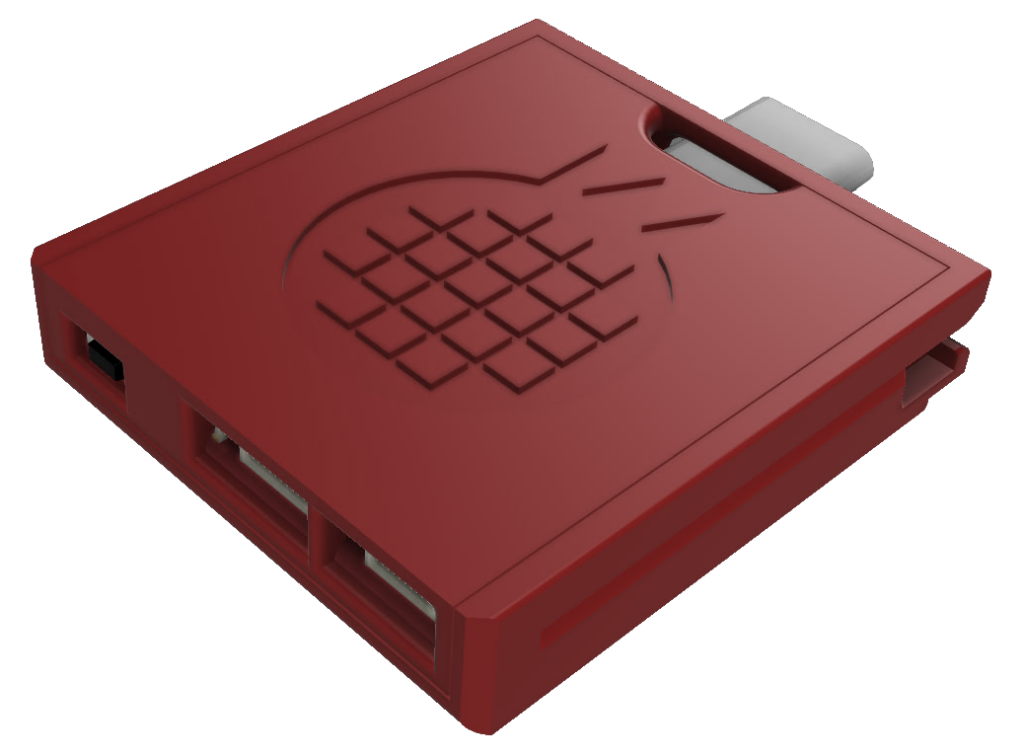
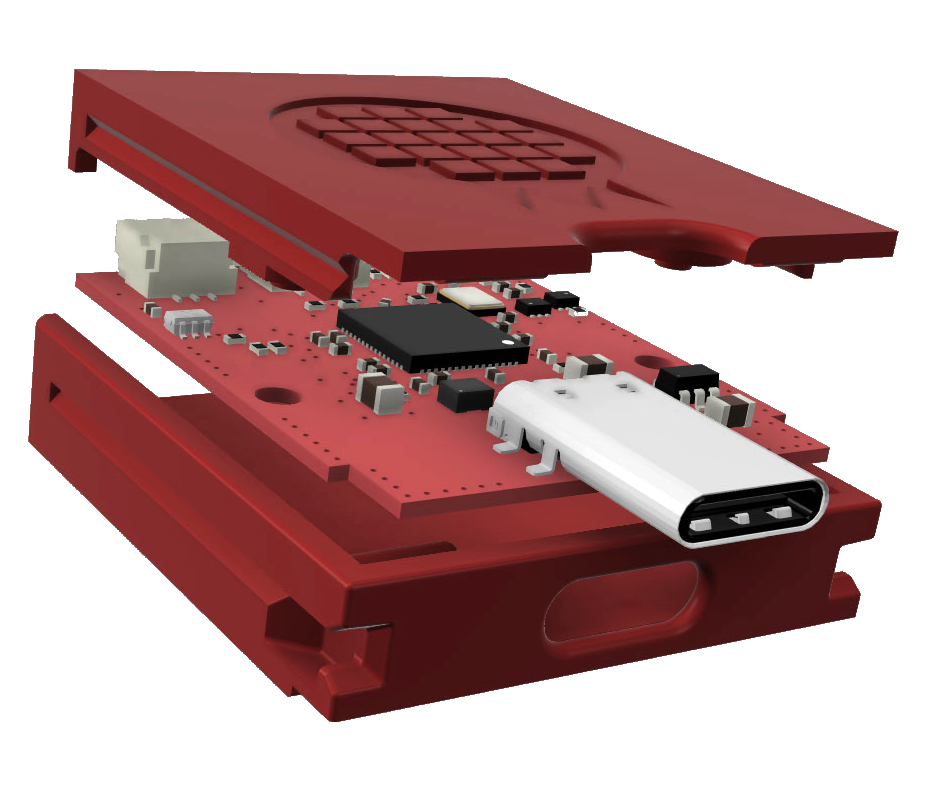
A USB Type-C devboard dongle based on RP2354, with 2 ports, in expansion card form factor
FramePico2 Expansion Card is an ultra-compact USB Type-C dongle and hardware interface powered by the RP2354A microcontroller chip. Measuring just 26 × 30 mm inside a protective enclosure, it plugs directly into any standard USB Type-C port on a PC, Mac, Linux machine, or Android device. Framework PC users (12, 13, 16, and Desktop) can slide it completely flush into any open Expansion Card bay as a permanent, built-in development tool.
Its useful for everyone that want to have an easy to use debug probe via SWD/UART or a development board platform with easy to use UART, I2C and ADC modules via its QWIIC-compatible “TREX” JST ports, in a form factor that just plugs in right away on USB-C hub of any device, inlcuding your phone!
Compact and convenient
As a multipurpose debug and development tool, FramePico2 can go with you anywhere. The ability to stash it away inside a Framework laptop means you’re equipped to debug hardware, flash external microcontrollers over SWD, or tackle a long list of tasks:
- Interface with Plug-and-Play sensors: Connect standard Qwiic and STEMMA QT sensor modules directly to the TREX port for rapid I2C prototyping without breadboards or jumper cables.
- Bus Sniffing and Scripting: Use CircuitPython or MicroPython to probe, configure, and automate I2C and UART peripherals on the fly from a terminal session.
- USB-HID Emulation & Macro Tool: Program the dongle to act as a hardware macro device, security key emulator, or USB-HID input device.
- Diagnose in the Field: Plug the dongle directly into an Android phone or tablet via USB-OTG for field sensor verification and portable serial datalogging.
Features & Specifications
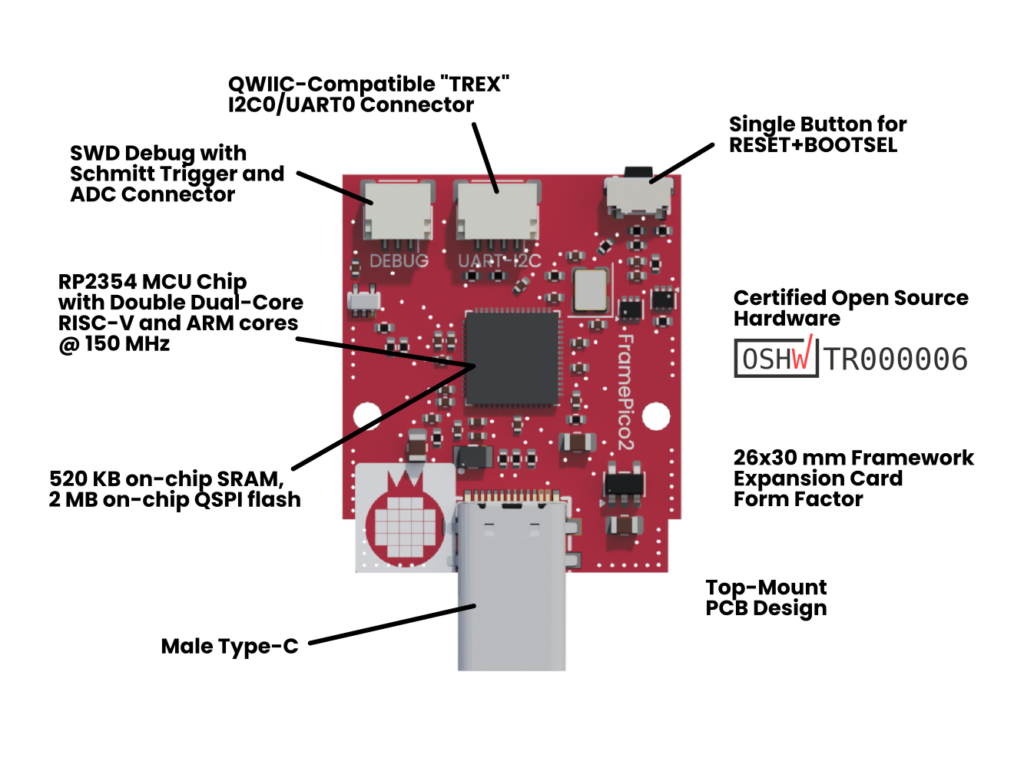
At its core is the RP2354A, featuring dual ARM Cortex-M33 or dual RISC-V based “Hazard3” cores running at up to 150 MHz, with 520 KB of on-chip SRAM and 2 MB of integrated QSPI flash. The card has 2 ports: A 3-pin SWD Port buffered with a Schmitt trigger, and a 4-pin “TREX” Port supporting I2C0/UART0 connections that is electrically and mechanically compatible with Qwiic and STEMMA QT 3.3 V modules. To keep the dongle small and durable, a single physical button handles both functions: a quick press resets the MCU, while holding it down triggers the RP2354A’s ROM bootloader via an onboard transistorized delay circuit.
- RP2354A MCU chip with dual-core ARM Cortex-M33 or RISC-V (Hazard3) processors @ 150 MHz, 520 KB on-chip SRAM and 2 MB on-chip QSPI flash.
- Safe SWD port protected with Schmitt trigger.
- 4-pin “TREX” port supporting IC20/UART0 channels, compatible with QWIIC/STEMMA QT cables and modules.
- Single button performing reset + bootsel with a transistorized delay circuit.
- Top-mount male TYPE-C, making the device a USB Type-C dongle.
- 26×30 mm Framework Expansion Card form factor PCB inside special case without screws.
Soon on Crowd Supply
FramePico2 Expansion Card is soon available for sale as a kit on Crowd Supply. To keep up to date with it and our other future products, subscribe to our Telegram channel and follow our social media accounts!